Wednesday, February 4, 2026

Neoliberalism's world of corruption (2016)

 By Phil Hearse

Neoliberalism’s world of corruption

by Phil Hearse

The Panama Papers’ revelations about the rich and powerful hiding untold billions in ‘offshore’ tax havens may be shocking, but it’s hardly a surprise to anyone who knows the first thing about the way that big business works. We are living through a blitzstorm of allegations and controversy about corruption. In the few years alone we’ve had:

  • The revelations in the Panama Papers that hundreds of companies and thousands of individuals, including 72 (!) present or former heads of state, hid their fortunes offshore. The names so far revealed include associates of Russian President Putin, and numerous members of the leadership of the Chinese Communist Party
  • The ‘Lux leaks’ revelations about how the Grand Duchy of Luxemburg conspires with big business conspires to launder its profits through tax minimal Luxemburg and how major companies like Amazon and Starbucks  shift their British profits to Luxemburg and pay little or no tax.
  • Revelations that bankers in Britain conspired to fix the ‘Libor’ rate – the inter-bank lending rate – so their banks could profit from trades or the impression they were worth more than they actually were.
  • Repeated allegations of corruption in sport – including athletics, tennis and cricket, either in terms of result fixing or unfairly influencing results through drug use.
  • Accusations against prominent politicians, including South African President Jacob Zuma and Turkish President Recep Tayyip Erdo?an, that they used vast amounts of public money to build huge residences.
  • British bank HSBC was in 2012 discovered to have received at least $880 billion in investments from the Mexican Sinaloa drug cartel.

A lot more things could be added to this list. The world seems to be awash with corruption. So what is it really all about?

The highly sanitised versions on the BBC would give you the impression that there’s a few bad apples out there who are giving the international business and finance communities a bad name by some sharp practice. Nothing could be further from the truth. Corruption is endemic in neoliberal capitalism. It is fundamental to the whole way the system works, and it is the method by which trillions is stolen from the poor and given to the rich. Here’s why and how.

Effects of Neoliberalism: kleptocracy

Of course corruption has always existed in capitalism. But neoliberalism, the ‘free market’ system that started in the 1980s, promoted it on a vast scale for two reasons.

Neoliberal deregulation and privatisation promoted the dominance of financial capital and the expense of industry and the state. Financialisation and low capital gains taxes have turned big companies and utilities into cash cows, virtual banks with huge wealth, looking to maximise the interest on their money and minimise their tax. Finance capital is, after all, basically about swindling. In the middle ages they called it usury.
The shift to the right crashed ‘socialist’ command economies and undermined nationalist governments in the third world, replacing both with corrupt and usually highly authoritarian neoliberal regimes. Getting hold of the state apparatus has become a royal road to mega-wealth for dozens of dictators and their cronies through simple theft.

The core of it is the banking system. European and American banks receive (read: launder) billions of dollars every year from international mafias, and in particular from drug dealers.  Sometimes by accident some of this comes to light. In 2006 Mexican soldiers intercepted a drug shipment in Ciudad del Carmen and found a cache of documents showing the Sinaloa drugs cartel had made payments of $378 billion to the American bank Wachovia, a subsidiary of the financial giant Welles Fargo.

Roberto Saviano, the author of the best-selling Gamorrah which exposed the workings of the Neapolitan crime organisation Camorra, claims that London is the centre of money laundering for Latin American drug money.  Even the British National Crime Agency says:

““We assess that hundreds of billions of US dollars of criminal money almost certainly continue to be laundered through UK banks, including their subsidiaries, each year.”

Saviano says that Mexico is the ‘heart’ of the drugs trade and London its ‘head’. Antonio Maria Costa, head of the UN Crime and Drugs Agency, says drug dealers invested $352 billion in Western banks in 2008, and this was key in keeping some major banks from collapse.

So corruption – receiving money from crime and drug cartels – is deeply ingrained in the culture of US and European banks. And this is not going to stop, given the vast profits involved.

Controlling the state – and looting its assets

The klepocratic state is an old story. It’s reckoned that no Mexican president leaves offices with less than $100m. Key Western allies from the 60s and 70s, like Mobutu, president of Zaire (DRC) from 1965-97 and Suharto, president of Indonesia from 1967-98, both established murderous regimes and systematically looted their respective peoples of billions of dollars.

But these were, in the 1960s and 70s, stand out, atypical, cases. Now looting the state by right wing regimes, often military-controlled regime, is an epidemic.Nigeria is a classic example today. A PWC report reckoned that $100 billion of public money, much of it oil revenues, had been stolen by corrupt politicians and officials in 2014. The result of this massive theft is that in a rich country, 62% of the population live in absolute poverty.

That’s the problem with the Peter Mandelson view of being comfortable about some people being ‘filthy rich’. Some people are filthy rich because millions are dirt poor. Nigeria is an example of something even more corrosive. Corruption at the top, backed by the army, creates corruption throughout society. Nothing happens at all without the payment of a bribe to some official or other. People who have no money to pay bribes stay at the bottom of the heap.

Corrupt Nigerian state officials have no problems finding a bank to launder their money, but if in doubt, the London property market is a good option. James Ibori, a state governor in his homeland, stole $250m from Nigeria, and much of the money was laundered through the UK to fund a luxurious lifestyle. He acquired a string of high-end properties in prime central London (see below on real estate corruption).

Mexico is an example of the synergy between crime proceeds, state corruption and international banks. Nearly all the drugs produced in Latin America have to go through, around or over Mexico to get to the US.

Except in the case of drug cartel turf wars, drug shipments are protected by the police and the army, and officials of the Mexicans states and top politicians in the national government are all paid off. The Mexican national state is corrupted with drug money from top to bottom: it is a narco-state pure and simple. The result is that even prosecutors have to look the other way. Border guards and junior police and army personnel have a stark choice: which do you prefer – a small bribe to look the other way, or torture followed by a bullet in the head? When everyone at the top is corrupted, local and junior officials are powerless.

The British media have been keen to highlight evidence from the Panama papers of offshore investments by people close to Russian President Vladimir Putin and relatives of top Chinese leaders President, Xi Jinping, and two other members of China’s elite Standing Committee, Zhang Gaoli and Liu Yunshan. Despite the West wanting to divert attention to ex-Communist rivals in a one-sided way, nonetheless these regimes of course are deeply corrupt.

Corruption in Russia goes right up to the Kremlin and the oligarchs who lead that country are linked to organised crime. Loyalty to the Putin state apparatus is ensured by the carrot and the stick. The carrot is the reward of state contracts to those who keep tight with Putin: the stick is the fear of violence at the hands of state-linked mafias.

In China there has been a major ‘anti-corruption’ drive since the Communist Party congress in 2012, launched by Xi Jingpin and endorsed by his predecessor Hu Jintao. In fact over the last decade there have been repeated calls to fight corruption. But given the naming of top Standing Committee members as controllers of offshore accounts, it seems hardly likely that this campaign is really inspired by a desire to ‘fight corruption’. More likely it is a mechanism for purging factional opponents – like the 2012 show trial of former minister and mayor of Chongqing Bo Xilai, accused of fomenting ‘egalitarianism’ and other pro-worker attitudes. It seems likely the campaigns is also aimed installing fear and loyalty to the present leadership into the Communist Party’s 90 million members: that’s why more than 300,000 party members have been sanctioned so far.

Outdistancing these super authoritarian/corrupt states are the ‘patrimonial states’, countries where the state is virtually owned by a single family. Examples of this were Libya under Gaddafi and of course Syria under the Assad family. Turkey’s Erdogan is trying hard to build that kind of state.

Influencing the State

Direct corruption by the state is one thing, influence is something else. In western democracies influence is stacked in favour of the rich and powerful. In the United States and increasingly in Britain it is professional lobbyists who fight their corner. The Atlantic magazine in the US points out:

“Corporations now spend about $2.6 billion a year on reported lobbying expenditures—more than the $2 billion we spend to fund the House ($1.18 billion) and Senate ($860 million). It’s a gap that has been widening since corporate lobbying began to regularly exceed the combined House-Senate budget in the early 2000s.
“Today, the biggest companies have upwards of 100 lobbyists representing them, allowing them to be everywhere, all the time. For every dollar spent on lobbying by labour unions and public-interest groups together, large corporations and their associations now spend $34. Of the 100 organizations that spend the most on lobbying, 95 consistently represent business.”
(http://www.theatlantic.com/business/archive/2015/04/how-corporate-lobbyists-conquered-american-democracy/390822/)

The above account doesn’t include the direct payments and other gifts given to members of Congress by big companies, not least the health insurance and healthcare companies who have fought so long and so successfully against a universal US healthcare system.

Britain is going in the same direction. As in the United States, business and politics are often revolving doors with former minister joining the boards of companies they dealt with when in power. Seumas Milne says:

“…lobbying doesn’t begin to cover the extent of corporate influence. More than ever the Tory party is in thrall to the City, with over half its income from bankers and hedge fund and private equity financiers. Peers who have made six-figure donations have been rewarded with government jobs.

“But the real corruption that has eaten into the heart of British public life is the tightening corporate grip on government and public institutions – not just by lobbyists, but by the politicians, civil servants, bankers and corporate advisers who increasingly swap jobs, favours and insider information, and inevitably come to see their interests as mutual and interchangeable. The doors are no longer just revolving but spinning, and the people charged with protecting the public interest are bought and sold with barely a fig leaf of regulation.”
(http://www.theguardian.com/commentisfree/2013/jun/04/corporate-britain-corrupt-lobbying-revolving-door)

Legalised corruption?

Corruption everywhere has the effect of transferring huge amounts of wealth from the poor to the rich. If poor individuals are not directly robbed, then their economic situation, their public services, their health service, their transport, their education – all these are robbed when taxes are avoided and government revenues robbed.

You can’t analyse corruption today by looking for illegal activity alone. Many of the practices that happen in rich and poor countries are legal or in a grey area where it’s difficult to tell criminal from the lawful.

For example, property dealing in Britain is profoundly corrupt. House prices in London (and thus in the whole country indirectly) are pressured by the huge amount of hot money from corrupt Russian oligarchs and assorted gangsters of various nationalities invested in the expensive end of the market. But nothing here is illegal, as far as the house purchases in Britain are concerned. It’s just that they are bought with corrupt money and force up the living costs of millions of ordinary British people.

Look at the purchase of rare earth minerals from the Congo, essential for computers and mobile phones. Much of this mineral wealth is controlled by war lord armies, guilty of war crimes and crimes against humanity. The companies who buy the mineral products they control – the moral equivalent of blood diamonds – have no contact with them at all. Dealers act as a buffer and through their transactions – perfectly legal – wealth based on rape and murder is miraculously washed clean.

Finance capital is by definition corrupt. The investment banks typically do not disclose their fees to investors in advance (they call their charges ‘consideration’) by deduct self-decided amounts as they go along. Free charging professionals like lawyers, and in many countries doctors and dentists, make up their own huge fees. Isn’t this corrupt? But there’s nothing illegal about it.

The tax dodges by major companies like Amazon, Facebook and Starbucks, are perfectly legal. They pay all the tax they are required by law – or by agreement –in countries like Ireland and Luxemburg where they are registered. Whether these practices are illegal in the UK for example is a very grey area. But corruption it certainly is.

All these examples have the same effect: robbing the poor to further enrich the wealthy.

Corruption in Sport

So why do we have this rash of allegations and disclosures about corruption in sport? The money poured into sport by television and sponsorship deals is truly vast. Corruption in sport, including taking banned drugs, is about the division of the money coming into the game, or about gambling on the results.

Corruption around the edges of rich sports has always existed. For example, think of the exotic fees charged to some football clubs by the agents of players being transferred, some of whom it later emerges have close links to club managers.

But today the profits from winning at sports are mind-boggling. Take Maria Sharapova. What she has won on the tennis court pales into insignificance to the sponsorship deals she’s gained from Porsche, TAG Heuer, Nike and Evian. Performance enhancing drugs are definitely worth it if they get you into the top earning bracket. Each athlete and their coaches and managers want to maximise their share of the cash coming into sport.

Fifa and Sepp Blatter is something else. World soccer is the richest sport. Fifa had the ability to make people very rich by its allocation of contracts and competitions and was therefore always a prime target for bribery.

But the bigger question is why all this corruption became a widely accepted or tolerated part of sport. Why would the South African cricket team under Hansie Cronje throw a match for a few hundred dollars per player?

The answer comes down to the zeitgeist, the spirit of the times. We live in a world where wealth and luxury are worshipped, where to have money is to be someone important, where to be a celebrity or a major sports star is to be worshipped. A world in which competition for wealth and celebrity is universal and where the rich are almost always keen to become even richer. And where not to be rich is to be a nobody.

Nothing exemplifies this more than the gift lounges and gift bags organised for Oscar nominees by big companies. Stars worth tens of millions of dollars stagger under the weight of free cameras, watches, jewellery, electronic goods picked up at these events. When being rich, being one of the ‘lords of humankind’, is all that matters, then how you gain your wealth and keep it doesn’t matter. Whoever it hurts or impoverishes.

Left Unity


Tuesday, February 3, 2026

Postmodernism, a New Stage of the Spewctacle

Debord and the Postmodern Turn: New Stages of the Spectacle


By Steven Best and Douglas Kellner

Kellner homepage: http://www.gseis.ucla.edu/faculty/kellner/kellner.html
Curriculum Vitae: http://www.gseis.ucla.edu/faculty/kellner/DK97CV.htm
Best homepage: http://www.utep.edu/philos/best.htm


"But certainly for the present age, which prefers the sign to the thing signified, the copy to the original, fancy to reality, the appearance to the essence, ... illusion only is sacred, truth profane. Nay, sacredness is held to be enhanced in proportion as truth decreases and illusion increases, so that the highest degree of illusion comes to be the highest degree of sacredness," Ludwig Feuerbach.

"There is no doubt for aynone who examines the question coldly that those who really want to shake an established society must formulate a theory which fundamentally explains this society, or which at least quite seems to give a satisfactory explantion," Guy Debord


Saturday, July 8, 2023

New Faces of Fascism (2018)

 Phil Hearse reviews New Faces of Fascism by Enzo Traverso, Verso, 2018


The forward surge of fascist and far right movements, symbolised by figures like Trump, Bolsonaro in Brazil and Salvini in Italy, poses important theoretical and political questions for the militant left. Enzo Traverso’s new book is one of the best responses from a Marxist viewpoint. Unlike many studies of this subject, this book does not attempt to provide a factual account of the progress of the hard right, but goes straight to some of the main analytical problems. These include how we can understand the new hard right in relation to ‘classical fascism’ in the 20th century, the idea of ‘populism’, identity politics (left and right), Islamophobia and anti-Semitism, as well as the usefulness (or otherwise) of the notion of totalitarianism. This is a big agenda, undertaken by an historian with a deep knowledge of modern politics and culture, and is therefore quite dense – decidedly not a basic introduction.

Myths of Ayn Rand (2009)

 Phil Hearse (2009)

Most people outside the United States have probably never heard of Ayn Rand, and a brief introduction to her ultra-pro-free market views would doubtless be enough to convince most of them they haven't missed anything. Yet 27 years after her death, Ayn Rand continues to be seriously debated in the US, her books sell hundreds of thousands each year, her views are propagated by right-wing think tanks and foundations and - bizarrely - Charlize Theron is in discussions to turn Rand's 1088-page magnum opus Atlas Shrugged into a TV mini-series. The Times Educational Supplement claimed in July 2009  that the Ayn Rand revival is gathering pace on US campuses. According to the TES:

Radical right threat to internet freedom (2019)

 Phil Hearse

Two recent events have focused attention on extreme right social media. The shooter in the Christchurch massacre was an addict of white supremacist message boards on platforms like Reddit and 4Chan. Like the alt-right platform Gab, these noticeboards are filled with overt racism, homophobia, misogyny and Hitler worship. A very different sort of hard right social media fuels Vox, the Spanish neo-fascist party that won 13% of the vote in the April general election. Like its siblings in France and Germany its racism is thinly-disguised Islamophobia, and it tries to present a ‘respectable’ image. One aspect of far-right social media often overlooked, but highly relevant with Vox, is the immense amount of money that funds it – generally from millionaire or billionaire backers.

REMEMBERING PETER GOWAN


Peter Gowan died on 12 June 2009. This obituary was written at the time.

Peter Gowan, Professor at London Metropolitan University, a member of the New Left Review editorial board and a former leader of the International Marxist Group (IMG), died on 12 June 2009. He was probably the leading Marxist expert on international relations writing in English, and wrote and spoke with an astonishing grasp of the inter-relationship between economic, political and military power in the modern world. His ability to knit together theory with a vast range of factual knowledge held his audiences spellbound.
But he was far from a detached academic; he was an utterly partisan, determined and vitriolic critic of American imperialism. For him, the central obstacle to world progress and social justice were what he called the “Dollar-Wall St regime”. After 9/11 Peter was in demand around the world to explain why the US had gone to war and what the ‘axis of evil’ and ‘war on terror’ were all about. He claimed American imperialism had made a ‘Faustian bid’ for world dominance, and that military violence was central to that bid. He was also convinced that it could not succeed; that ultimately world domination was impossible by a single imperialist power and that the United States was ‘triumphing towards disaster’.

NNEW POST TEST

 This is a new post test


Thursday, December 12, 2019

Jeffery Webber on the Crisis of the Latin American Left

Speech given at Socialist Resistance Forum London, March 28 2017

Right win putsch, escalating racism, deepening austerity (2017) - the real meaning of Brexit


Phil Hearse (2017)

“The way the Leave campaign have tried to ramp up a fear of immigration has been disgraceful—but the truth is that if you see an immigrant in a hospital, they’re far more likely to be working there than being treated. The time has come to brand the “Brexit” campaign for what it is—a bid for a right-wing Tory takeover of the reins of power in the UK and to dismantle the hard-worn social gains of the last few decades. The people leading the case for a vote to leave are on the right of the Conservative Party and will take an “out” vote as their signal to make their power grab complete.” Nicola Sturgeon, 16/6/2016
Our enemy’s enemy is not necessarily our friend, and of course the Scottish National Party, despite its vaguely leftish social democratic programme, is not a friend of socialism. But Nicola Sturgeon was completely correct on what was happening during the EU referendum last year. Being anti-EU has been the banner of the Conservative right wing for 30 years or more. The victory of the Brexit vote last June represented the spectacular victory of the Conservative right and the forces that backed them – like UKIP.

Trump and the Future (2016)

Phil Hearse (first published at Left Unity)
The shocking victory of Donald Trump in the US presidential elections is a major turning point that is part of, and will give new momentum to, a surge to the right in world politics.
The international situation is dealt with below, but for starters we should note that there is near certainty that the far right will win the Austrian presidential re-run and that Marine Le Pen has a major chance to win the presidential election new year in France.
Most of all though we have to insist that the Trump victory follows on from, and in part of the same trend as, Brexit in Britain. It seems that that the Lexiteers have gone remarkably quiet. No wonder. How can anyone seriously pretend that the new Teresa May government does not represent a shift to the right in bourgeois politics, or that the victory of Brexit was not achieved on the back of a xenophobic anti-immigrant campaign?

Prithan Singh, India's Naxalite Movement (2016)

By Pritam Singh, Professor of Economics, Oxford Brooks University.


Pritam Singh Professor of Economics Faculty of Business Oxford Brookes University, Oxford UK psingh@brookes.ac.uk (Draft paper for the conference on ‘Before ’68: the Left, Activism and Social Movements in the Long 1960s’ at the University of East Anglia, Norwich, 13-14th February 2016)

India’s Maoist/Naxalite movement Introduction On 25 May 1967, in one village called Prasadujot in the Naxalbari bloc in the West Bengal state of India, a group of peasants led by two left-wing activists Kanu Sanyal (1929- 2010) and Jangal Santhal (?-1981) who were supported by a communist ideologue Charu Mazumdar (1918-1972)i tried to forcibly seize the land from some landlords who controlled the land to which the peasants had the legal entitlement.

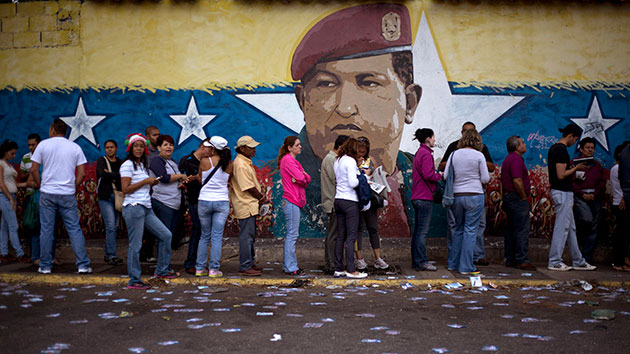
Facing opposition onslaught, Chavismo must return to its roots

The United Socialist Party of Venezuela (PSUV) suffered a crushing defeat in Sunday’s National Assembly elections, winning just 55 of 167 seats. Formerly in opposition, the Venezuelan right took a two-thirds majority with 112 seats, gaining control of the South American country’s legislature for the first time in 17 years.

The outcome affords the Venezuelan right an unprecedented opportunity to roll back the gains of the Bolivarian Revolution by legal means, without having to resort to coups or other forms of extra-institutional violence. But will they succeed?

Counter-Revolution without Counter-Hegemony?

Under Venezuela’s democratic system, the single-house National Assembly holds enormous power: a two-thirds super-majority can pass or revoke organic constitutional laws, replace Supreme Court magistrates, appoint the heads of crucial public institutions such as the Public Prosecutor’s office and the National Electoral Council, and even convene a constituent assembly to rewrite the constitution.

In short, a two-thirds majority gives the opposition all of the institutional weapons necessary to reverse many of the key transformations of the Venezuelan state achieved by the Bolivarian Revolution over the last seventeen years.

They will now be empowered to revoke critical revolutionary legislation such as the Organic Law of Communes, the Organic Work and Workers’ Law (LOTTT), among numerous others, repeal international treaties such as the ALBA-TP and PetroCaribe, as well as pack the Supreme Court with an eye towards impeaching President Nicolas Maduro.

However, while the opposition has indeed won a super-majority and the concomitant legal power to pursue these changes, this does not necessarily mean that they have a popular mandate to carry out such a reactionary agenda.

Saturday, December 7, 2019

Neoliberalism's world og corruption - April 2016

By Phil Hearse
T
Rich and powerful hide their money offshore

The Panama Papers’ revelations about the rich and powerful hiding untold billions in ‘offshore’ tax havens may be shocking, but it’s hardly a surprise to anyone who knows the first thing about the way that big business works. We are living through a blitzstorm of allegations and controversy about corruption. In the few years alone we’ve had:

A Socialist Response to Terrorist Attacks: Pierre Rousset and Francois Sabado, March 2016

This article was written by two veteran French revolutionary socialists in  response to the November 2015 attacks in Paris. Its logic and position stands equally for the recent attacks in Belgium. "At such a time, we of course continue the class struggle, to support the struggle of all the oppressed; but beyond that, we defend humanity against barbarism. "

Friday, December 6, 2019

Welcome to the World of Apple


Phil Hearse explains how the world’s richest company rips off workers and governments worldwide

Apple headquarters in Cupertino, California
2/9/2016. First published by Left Unity

The ruling by EU competition commissioner Margarethe Vestager that Apple should pay the Irish government €13.2 bn, because the derisory 2% tax charged on Apple profits was ‘unfair’ to other companies, reveals just a tiny corner of the tax, labour and political practices of the world’s most profitable company. Apple practice is the gold standard of multinational super-exploitation that modern neoliberal corporations aspire to. How Apple functions is closely mirrored by the practices of transnational corporations like Google, McDonalds, Amazon, Starbucks, Fiat Chrysler and many others.


Critics of Vestager – like Apple boss Tim Cook, Ryanair supremo Michael O’Leary and former EU competition commissioner Neelie Kroes (who now works for tax evader Uber) – say she is wrong because the Irish government should be able to determine its own tax rates. The main point however is that Apple was able to aggregate all its profits in Europe, Asia and Africa – most of the world outside the US – in its Ireland subsidiary to benefit from ultra-low tax rates. The Irish government was a co-conspirator in a worldwide scam, ripping off governments and citizens internationally.

A Coup in Brazil - by Alfredo Saad-Filho

Every so often, the bourgeois political system runs into crisis. The machinery of the state jams; the veils of consent are torn asunder; and the tools of power appear disturbingly naked. Brazil is living through one of those moments — it is dreamland for social scientists; a nightmare for everyone else.
Dilma Rousseff was elected president in 2010, with a 56-44 percent majority against the right-wing, neoliberal Brazilian Social Democratic Party (PSDB) opposition candidate. She was reelected four years later with a diminished yet convincing majority of 52-48 percent, or a difference of 3.5 million votes.

A Balance Sheet of the New Anticaspitalist Party - Pierre Rousset (February 2016)

In 2009 the French LCR,  follwing two highky successful presidential election campaigns with candidate Olivier Besacenot, took the initiative to form the New Anti-Capitalsit Party (NPA). Although the organisation is still significant compared with British far left groups, its early promise and membership surge has not been maintained.  Here longtime French revolutionary socialist leader Pierre Rousset takes a long hard look at the balance sheet of the NPA.
The following piece was written for Kojkkino, the theoretical magazine of the Greek organization DEA. Though quite long, it does not claim to cover all sides of the question. Indeed, it’s the kind of article that is never really finished and that has to be constantly reworked and supplemented. Its main objective is to stimulate collective thinking about the lessons of the successes and failures of the NPA from its birth to the present day.

Stuart Hall, 2033-2014

 Robin Blackburn (ESSF via NLR)

Stuart Hall CND rally Trafalgar Square 1963
The renowned cultural theorist Stuart Hall, who died on 10 February 2014, was the first editor of the New Left Review (NLR). Stepping down in 1962, he continued to play an outstanding role in the broader New Left for the rest of his life. Stuart made decisive contributions to cultural theory and interpretation, yet a political impulse – involving both a political challenge to dominant cultural patterns and a cultural challenge to hegemonic politics – pervades his work. 

Turkey heads for dictatorship - March 2016

By Sarah Parker and Phil Hearse (first published by Left Unity)

On March 21 hundreds of thousands of Kurdish people in Diyarbakır, unofficial capital of Turkish Kurdistan, flocked to celebrations of Newroz, the Kurdish New Year. The celebrations this year had a more than usual political angle – not just a celebration of Kurdish identity but a demonstration of opposition to the brutal dictatorial actions of Turkish president Recep Erdoğan and his ruling AKP (Justice and Development Party).

The politics of the Newroz are well understood by the regime. In Istanbul tens of thousands of people from across the city tried to reach the Bakırköy district to join the massive Newroz celebration which had been banned by the city governor. In a scene repeated in many cities, people who did reach the celebrations were attacked by the police. Dozens of people were arrested and many injured.
Erdoğan and the AKP are carrying through an all-out attack on civil liberties, opposition parties and media, critical academics and most of all against the Kurdish population of South East Turkey and northern Syria.

The rise and fall of Syriza - Stathis Kouvlakis (NLR) - March 2016

New Left Review. You can download a pdf or order a copy of NLR 97 or subscribe to the magazine by clicking this link

Syriza won power in January 2015 as an anti-austerity party—the most advanced political opposition so far to the hardening deflationary policies of the Brussels–Berlin–Frankfurt axis. Six months later, the Tsipras government forced through the harshest austerity package Greece had yet seen. This trajectory was a predictable outcome of the contradiction embodied in Syriza’s programme: reject austerity, but keep the euro. Why was Tsipras so incapable of envisaging a course inside the EU but outside the Eurozone, the position of Sweden, Denmark, Poland and half a dozen other European countries?
First, one shouldn’t underestimate the popularity of the euro in the southern-periphery countries—Greece, Spain, Portugal—for whom joining the EU meant accessing political and economic modernity. For Greece, in particular, it meant being part of the West in a different way to that of the US-imposed post-civil war regime. It seemed a guarantee of the new democratic course: after all, it’s only since 1974 that Greece has known a political regime similar to other Western countries, after decades of authoritarianism, military dictatorship and civil war.


The right wing fight to ditch Corbyn is already underway - January 2016


Another day, another sharp attack on Jeremy Corbyn in the Guardian, this time from Peter Mandelson. Mandelson heaps half-truths upon untruths and tops them up with venomous red baiting:

But Corbyn is now in a position to impose his views on the party, and he is doing so by very unconventional means. To secure his support base and grip within the party, Corbyn has created Momentum, a trade union-funded organisation run in conjunction with hard-left networks outside the party. This differentiates it from the moderates’ Progress organisation, which has no outside allegiances…..You would expect Corbyn to recruit loyalists to his office in parliament, but this is largely staffed from two further far left entities: Socialist Action, a Trotskyite group most closely associated with Ken Livingstone, and Labour Representation Committee, which was founded by John McDonnell, the shadow chancellor.” (1)

Mandelson accuses Corbyn of wanting total dominance of the party and a total marginalising of the centre and right. This may be part of the campaign to avert a reshuffle of the shadow cabinet, but it is symptomatic of something else: the campaign to remove Corbyn is already underway.

What Mandelson underestimates of course is that the Corbyn phenomenon is a function of something much bigger than the many thousands who've joined Labour or registered to vote in the election. It's a crystallisation of the opinions of hundreds of thousands, maybe millions of people, fed up with pro-austerity politicians including New Labour. This phenomenon will not go away with a successful leadership coup against Corbyn, but it can suffer an important political defeat.

The Building of the Vietnam Solidarity Campaign and its Consequences for the British Left

Ernest Tate (1) and Phil Hearse (2)

Delivered at the Left Before 1968 conference, organised at UEA by the Socialist History Society and the University of East Anglia Department of History, February 13/ 14, 2016

Part 1 – Building the VSC

In line with the theme of this conference this presentation will not say much about the large anti-war mobilisations in 1968 or what happened later. Rather, it will discuss what lay behind the remarkable rise of the Vietnam Solidarity Campaign (VSC) and the factors that influenced its development. 

Launched on 20 December1965, the VSC initiated a series of ad-hoc committees to organise mass protests on the streets of London against the escalation of the war in Vietnam and the Labour Government’s complicity in it.  These protests came to characterise the period. They are now seen as an important expression of the youth radicalisation of those years, and raised the central question for the whole British left of the attitude the working class should take towards the colonial revolution.